About
Groups make it easier to manage access for multiple users. You can create groups and use them to assign entitlements and collaboration rights.
The Manage Groups tab is available in the Content Hubs and KAF/LMS Extensions Configuration Management console. Administrators can use Manage Groups to:
- Create groups.
- Add or remove users from groups.
- Edit, copy, and delete groups.
- Perform bulk actions on multiple groups.
- Search, sort, and filter groups and users.
Users added to a group through the Samlgroupsync module are identified as automatically added users within the group.
Group creation modes
You can manage user group assignments in the following ways:
- Manually - Groups and group memberships are managed from the Manage Groups tab.
- Automatically - Groups created through the Samlgroupsync or SSOGroupSync modules are displayed on the group page.
Create a group
- Log in to your Configuration Management console.
- Click the Manage Groups tab.
-
If you're creating the first group, click Create Your First Group. Otherwise, click Add New Group.

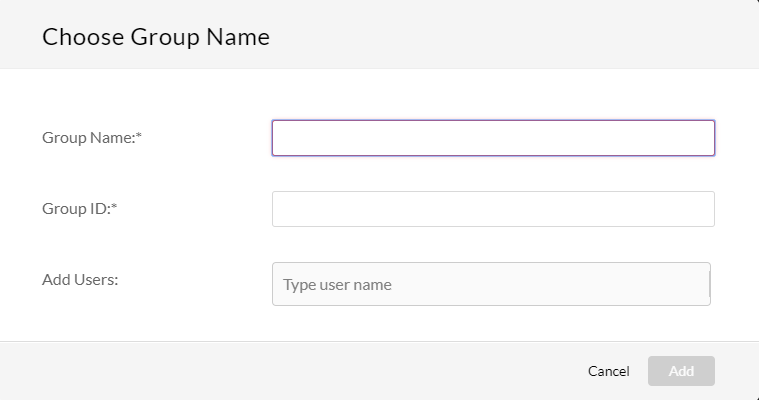
The Choose group name window opens.
-
Enter the group name.
Group names and IDs don't support special characters. This includes characters entered using Shift + number keys and characters from languages such as Japanese, Hebrew, and Cyrillic.
The group ID is generated automatically from the group name.
- To add users, start typing a user's name and select the user from the suggestions.
- Click Add.

The Groups management dashboard displays.


Repeat the previous step for each user you want to add.

You can add up to 3,000 users in a single batch.
A success message displays, and the group is added to the dashboard.

Manage groups
Groups management dashboard
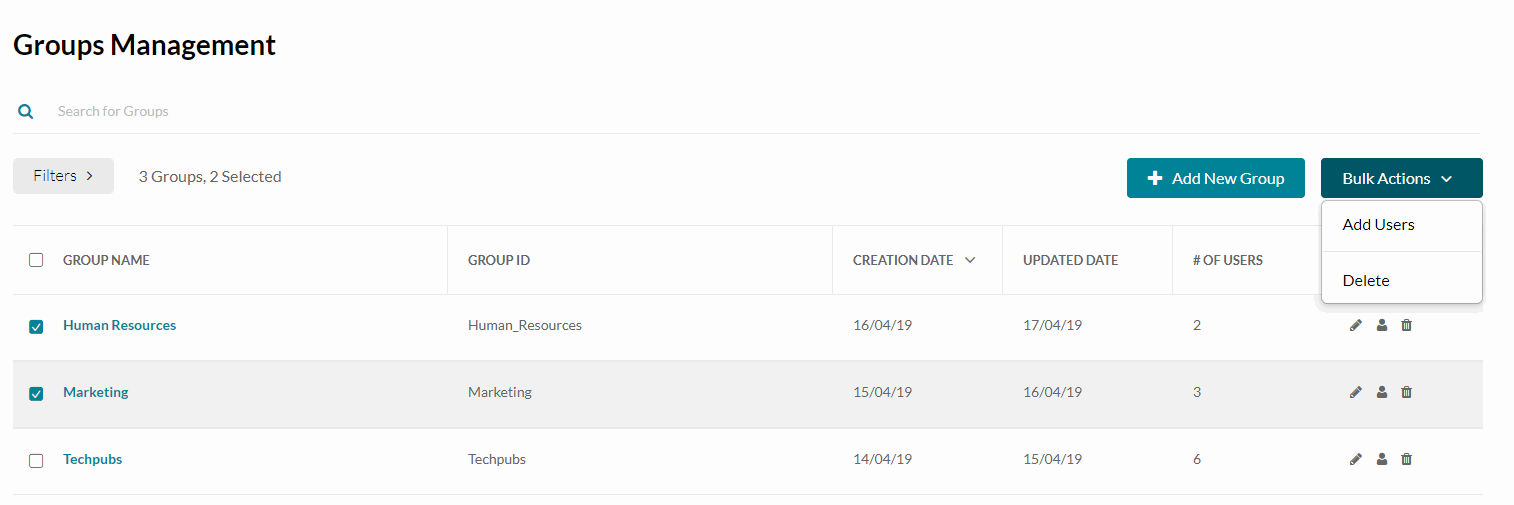
The Groups management dashboard displays the following information for each group:
- Group Name
- Group ID
- Creation date
- Updated date
- Number of users in the group
- Actions - Edit, add users, copy, or delete a group.

You can also use the dashboard to:
- Create groups.
- Perform actions on individual groups.
- Perform bulk actions on multiple groups.
- Open a group to view and manage its users.
- Filter groups.
- Sort groups by creation date in ascending or descending order.
- Search for groups.
Perform actions on a group
Use the icons in the Actions column to manage an individual group.

Edit a group
Click the pencil icon to open the group page, where you can view and manage the group's users and settings.
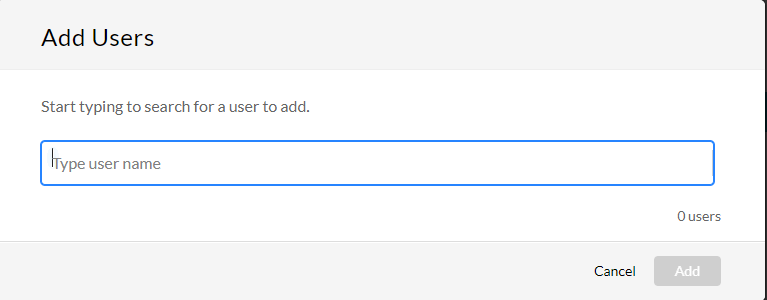
Add users to a group
- Click the person icon.
- Enter a user's name and select the user from the suggestions.
- Repeat for any additional users.
-
Click Add.
Copy a group
Copy a group when you want to create another group with a similar list of users. After copying the group, you can add or remove users as needed.
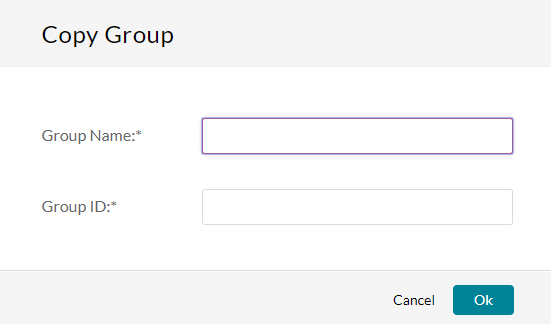
- Click the copy icon for the group you want to copy.
- Enter a Group Name and Group ID.
-
Click OK.
Delete a group
- Click the trash icon for the group you want to delete.
- Review the confirmation message.
- Click Delete.
Deleting a group removes the users from the group.
Perform bulk actions
Use Bulk Actions to add users to multiple groups or delete multiple groups at the same time.
Add users to multiple groups
- In the Groups management dashboard, select the checkboxes next to the groups you want to update.
-
Select Add Users from the Bulk Actions menu.
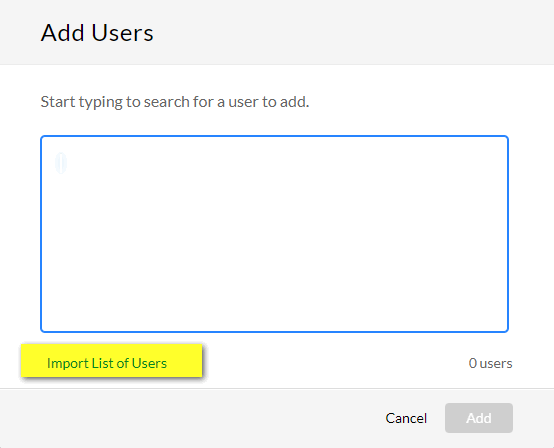
- In the Add Users window, add the users and click Add.
Import a list of users
You can also import a list of user IDs to add multiple users to the selected groups.
-
Click Import List of Users.
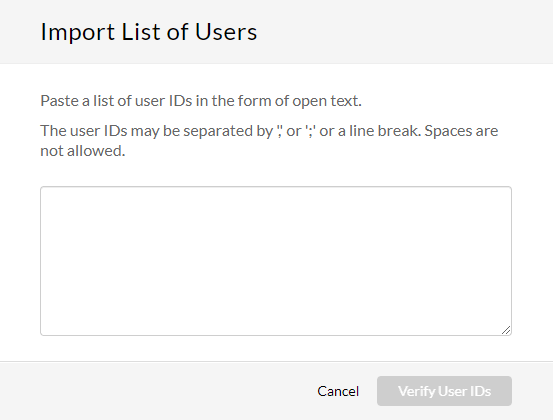
- Enter the user IDs separated by commas or semicolons.
-
Click Verify User IDs.
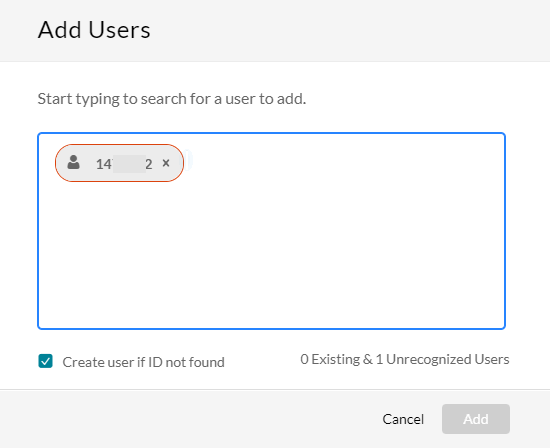
- If a user ID isn't found, you can click Create user.
- Click Add to add the users to the selected groups.
Delete multiple groups
- In the Groups management dashboard, select the checkboxes next to the groups you want to delete.
- Select Delete from the Bulk Actions menu.
- Review the confirmation message.
- Click Delete.
View and manage users in a group
Click a group name in the Groups management dashboard to open the group page.
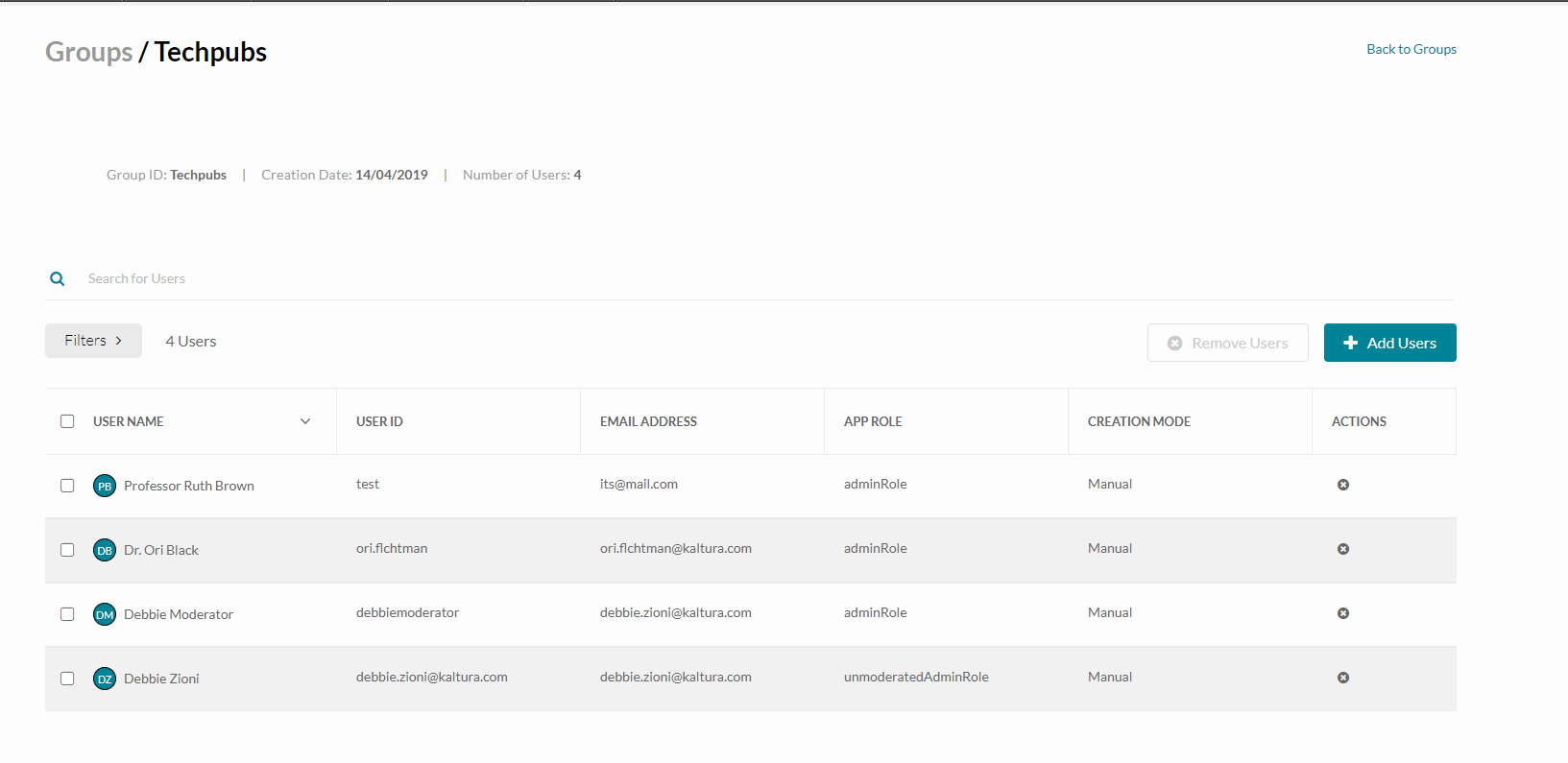
The users table displays the following information for each user:
- User name - Displays the user's name and profile image. If an image isn't available, the user's initials are displayed. If neither is available, a generic user icon is displayed.
- User ID - Displays the user's ID.
- Email address - Displays the user's email address.
- Application role - Displays the user's application role, as configured in the Manage Users tab. You can use roles to create groups. Permissions based on roles are managed from the Manage Groups tab.
- Creation mode - Indicates whether the user was added manually or automatically.
- Actions - Provides the option to remove the user from the group.
You can also:
- Change the group name.
- Search for users.
- Filter users.
- Sort users by User Name. Users are sorted by name by default. Click the arrow in the User Name column to switch between ascending and descending order.
- Click Back to Groups to return to the Groups management dashboard.
Remove a user from a group
In the Actions column, click the trash icon for the user you want to remove.
Change the group name
- Hover over the group name. A pencil icon displays.
- Click the pencil icon.
- Edit the group name.
- Click the checkmark to save the change, or click X to cancel.


Filter groups and users
Filter groups
You can filter groups in the Groups management dashboard by:
- Creation date
- Updated date
- Click Filters.
- Enter the date criteria.
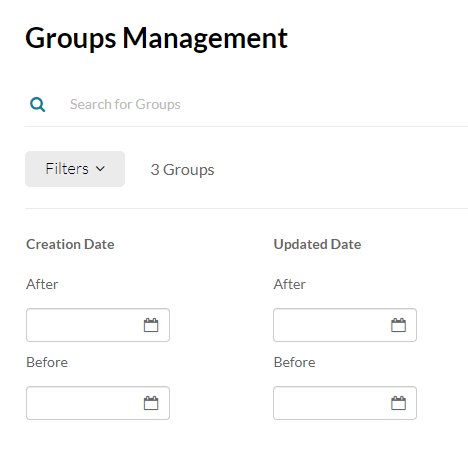
The Groups management dashboard displays the groups that match the selected criteria.
Filter users in a group
You can filter users in a group by:
- Application role
- Creation date
- Updated date
- Click Filters.
- Select the application roles you want to filter by.
- Enter the date criteria.
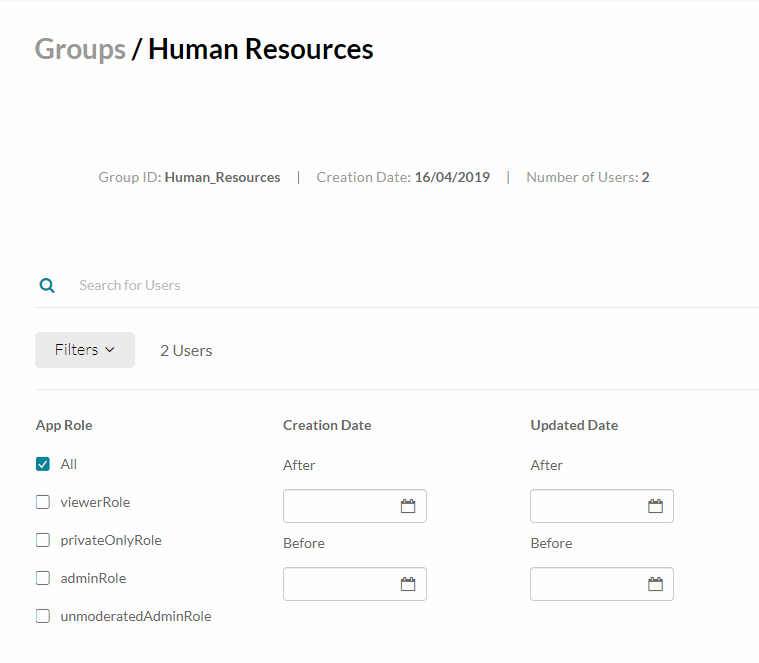
The users table displays the users that match the selected criteria.